motorharp: line drawing of kid with glasses intently reading (Default)
I interfaced the entire front bodice of my circle dress based on the example dress I deconstructed. I found that Pellon 865F Bi-Stretch Lite was closest in look and feeling to the interfacing in the RTW dress. 

Also, it did not have the normal sewing industry interfacing instructions - hold the iron on one area for 10-15 seconds. They said to glide the iron across the surface. And I had just read Fashion Incubator's "How to apply interfacing", in which Kathleen Fasanella said basically the same thing, but much more in depth. I used to hate fusing interfacing because it took so long! Just ironing it on is such a relief.

After I figure out whether I need stabilizers on my back darts, I intend to construct the dress using a combination of what I learned from the RTW dress and, again on Fashion Incubator, articles about "A better way to sew linings and facings" part 1 and part 2.

The article "Interfacing, 10 tips" has good info, too.

I sewed the circle dart and the CF seam. The circle seams are 1/4" and the CF seam is 3/8".  Sewing a curved seam with 1/4" SAs is so amazingly easy. I did not have to clip anything and it went together so smoothly. SO SMOOTHLY.

Oh, and I may need to trim the back darts?

motorharp: line drawing of kid with glasses intently reading (Default)
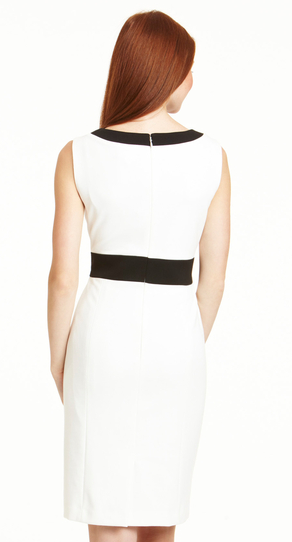
The dress was (is it "is" instead, now that I've taken it apart? Or is it to late in the evening to philosophize about that?) a TAHARI - ARTHUR S. LEVINE size 6. The shell is 77% cotton, 21% polyester, and 2% spandex. The lining is 100% acetate. It's made in China, and I have to say, very well made. It is this very dress, except made in a brown herringbone fabric:

2012 1030 Tahari Arthur S. Levine Slit Neck Sheath Dress front2012 1030 Tahari Arthur S. Levine Slit Neck Sheath Dress Back

One thing I wondered when searching for pictures of the actual dress and not finding it: is the brown dress from an earlier season and the white is more recent? That would be a really good way to save some production costs. The pattern is exactly the same, just the fabric and embellishments are different. (The brown dress had brass studs around the slit and two rows down the center front waistband, as well as gold topstitching.) It screamed 90s at me in the thrift store, while the above dress does not.

Various things about this dress:
+ The lining was completely sewn in by machine, including the back kick pleat. I drew and labeled a very confusing diagram of what I thought would be the construction process. I remember thinking it was very clever and that I probably wouldn't be able to sew it that way. I was right. I came close though.
+ The construction thread was a little finer than the "all-purpose" polyester home sewing thread. And stronger.
+ The seam allowances were serged after the seams were sewn and the seams were pressed open.
+ The dress and lining were constructed separately and entirely and zipper and back seam were done last. The dress and lining were constructed in a different order.
+ The lining seemed to be the same size as the dress, not bigger or smaller, although there were wrinkles in the lining like it was too big.
+ There was a metric crap-ton of interfacing and stabilizers in this dress.

Let's take a tour:

Arm scye side front piece stabilizer and interfacing
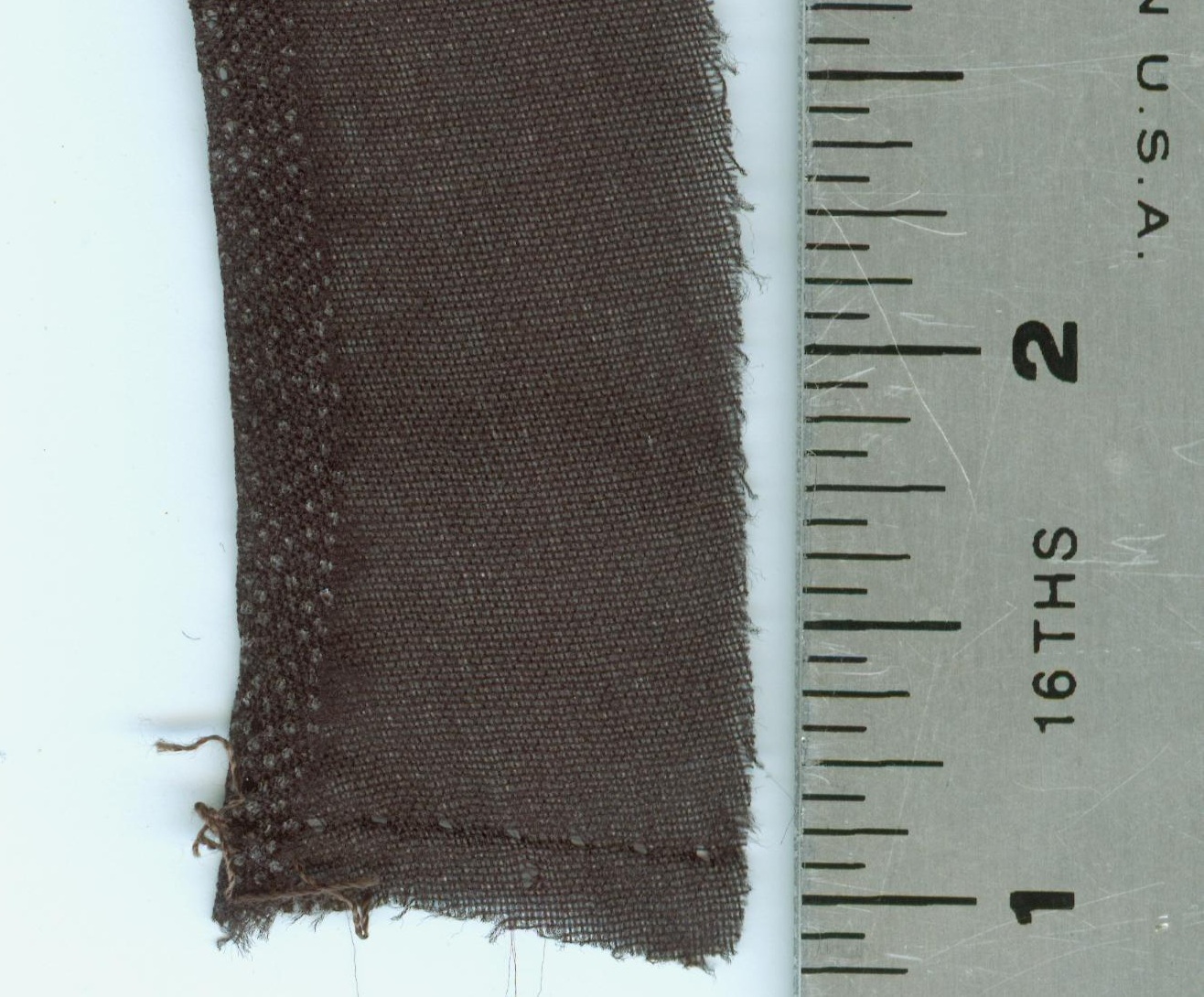
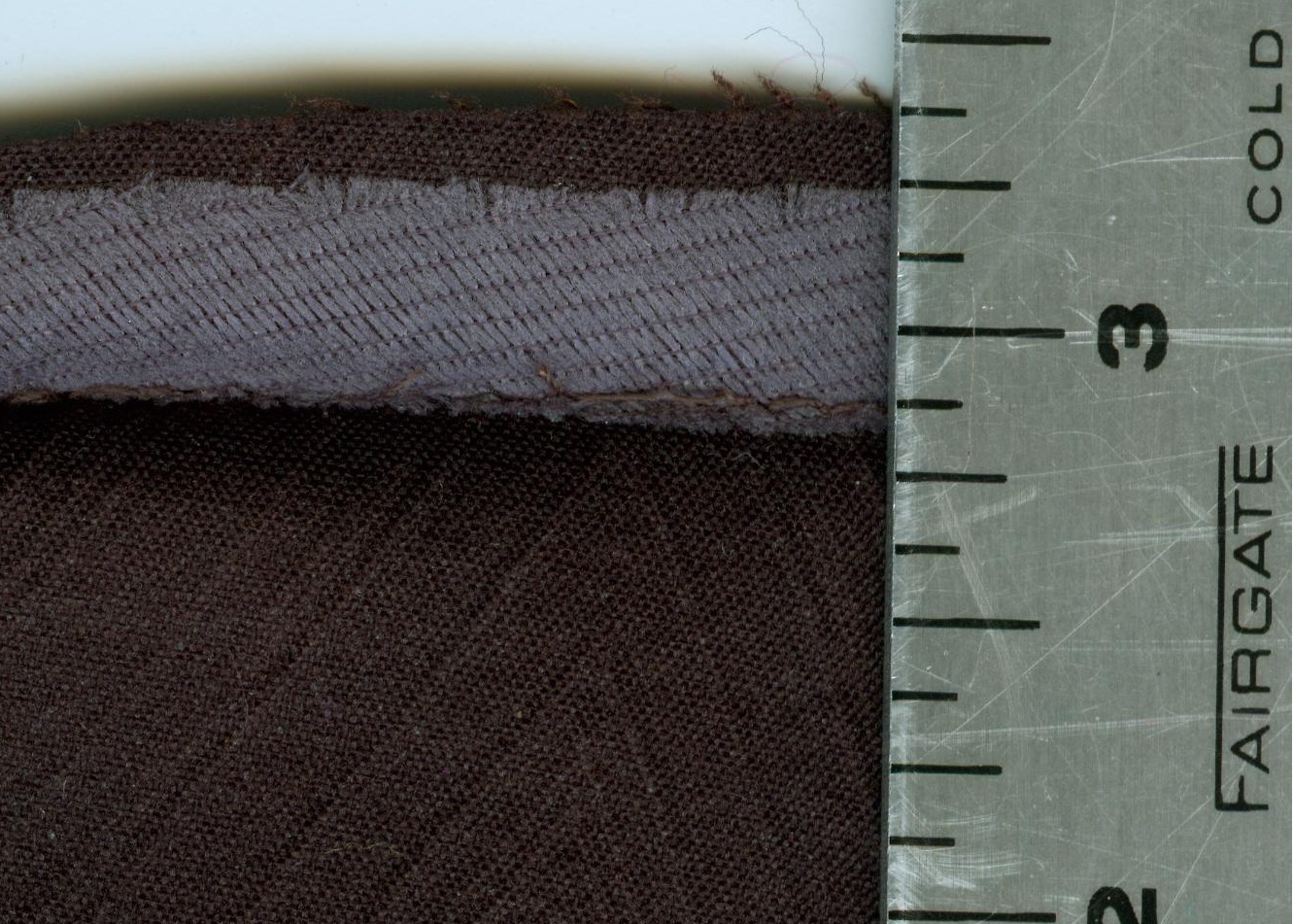
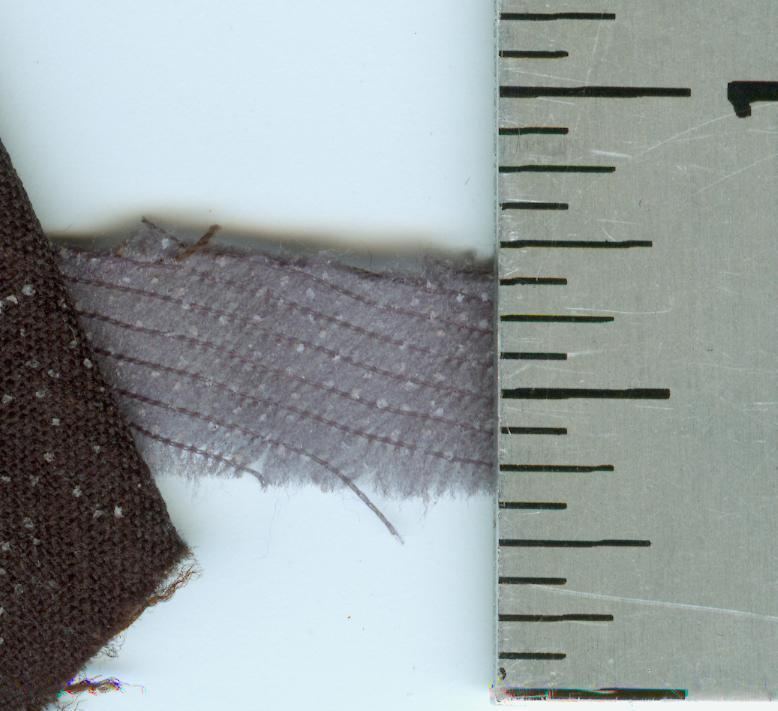
This is the left bodice front. It has a very fine woven interfacing on the princess seam (black strip on right) and what I learned is 3% tape on the armhole seam. I happened to check out a Threads video from the library - Threads Industry Insider Techniques, vol 2 - where they mentioned this exact thing. It's basically Armo Weft cut at a 22.5° angle (half of 45°, or half the bias). It's apparently used a lot in the tailoring industry when you need your stabilizer to be able to curve.

Finely woven interfacing cropped
The above is the fine woven interfacing. The entire bodice front was interfaced, along with the front and back waistband, the neck edge, the neck facings, the kick pleat, and the hem. In the lining, the neck edge and armhole seams were interfaced.

Waistline 3% tape in seams close-up
This is a close-up of the 3% tape. You should be able to click on this pic and get a real closeup. This was used on the armscye (armhole).

Close-up of 3% tape
Another close-up of the 3% tape.

Stabilizer close-up in arm scye
This is some rayon (I'm assuming) stabilizing tape I found only in the armhole. I think. It's late and I don't feel like dragging the dress out of storage. I know I remember thinking the armhole stabilizing was a bit gratuitous.

Bias strips cut from the lining material were used on both the neck edge and in the seam under the invisible zipper.
motorharp: line drawing of kid with glasses intently reading (Default)

Mostly notes for myself, but may be of interest to you if you want to improve your sewing.

 In her book "The Entreprenuer's Guide to Sewn Product Manufacturing", Kathleen Fasanella (who also writes Fashion Incubator, noticing a trend?) recommended taking apart ready-to-wear clothing to see how it's made and reverse engineer it.  To further combat my sewing indifference, I'm doing that with a dress from the thrift store. I've already learned so much. 

Like, yes, they use a ton of interfacing. A ton.

One thing I'm confused about which I need clearing up, though, is the lining.  Now, Fasanella and a few other tailoring books I've read say the lining has to be bigger than the garment because it hugs the curves of body more than the garment (and therefore would have more surface area).  However, this doesn't seem to be plausible: if the lining is bigger, it's going to roll to the outside of the garment.  The dress I'm taking apart would seem to agree with me: there are creases in the lining taking up ease which are obviously from wearing the dress.  If the lining is folding over on itself when the dress is worn, wouldn't that mean there is too much fabric in the lining, ie the lining is too big

I'll be adding more as I go.

Profile

motorharp: line drawing of kid with glasses intently reading (Default)
motorharp

October 2025

S M T W T F S
   1234
567891011
1213141516 1718
19202122232425
262728293031 

Syndicate

RSS Atom

Most Popular Tags

Style Credit

Expand Cut Tags

No cut tags
Page generated 8 Apr 2026 08:07 pm
Powered by Dreamwidth Studios